Monday, October 1, 2018

Studying Poetic Form - Petrarchan Sonnets

Overview:  The sonnet, as a poetic genre, began in Italy in the thirteenth century, and, under the later influence of the Italian poet Petrarch, became internationally popular. Petrarch established the basic form of the so-called Petrarchan sonnet Also called Italian sonnet: 14 lines divided into two clear parts, an opening octet (8 lines) and a closing sestet (6 lines) with a fixed rhyme scheme (abbaabba cdecde). Often the octet will pose a problem or paradox which the sestet will resolve. Petrarch also established the convention of the sonnet sequence as a series of love poems written by an adoring lover to an unattainable and unapproachable lady of unsurpassed beauty. The Petrarchan sonnet convention, in other words, established, not merely the form of the poem, but also the subject matter.


"Sonnet 292" from the Canzoniere
translated by Anthony Mortimer 


The eyes I spoke of once in words that burn,
the arms and hands and feet and lovely face
that took me from myself for such a space
of time and marked me out from other men;
the waving hair of unmixed gold that shone,
the smile that flashed with the angelic rays
that used to make this earth a paradise,
are now a little dust, all feeling gone;
and yet I live, grief and disdain to me,
left where the light I cherished never shows,
in fragile bark on the tempestuous sea.
Here let my loving song come to a close;
the vein of my accustomed art is dry,
and this, my lyre, turned at last to tears.


The eyes I spoke of with such warmth,
The arms and hands and feet and face
Which took me away from myself
And marked me out from other people;
The waving hair of pure shining gold,
And the flash of her angelic smile,
Which used to make a paradise on earth,
Are a little dust, that feels nothing.
And yet I live, for which I grieve and despise myself,
Left without the light I loved so much,
In a great storm on an unprotected raft.
Here let there be an end to my loving song:
The vein of my accustomed invention has run dry,
And my lyre is turned to tears.


Gli occhi di ch'io parlai sì caldamente,
et le braccia et le mani e i piedi e 'l viso,
che m'avean sì­ da me stesso diviso,
et fatto singular da l'altra gente;
le crespe chiome d'òr puro lucente
'l lampeggiar de l'angelico riso,
che solean fare in terra un paradiso,
poca polvere son, che nulla sente.
Et io pur vivo, onde mi doglio e sdegno,
rimaso senza 'l lume ch'amai tanto,
in gran fortuna e 'n disarmato legno.
Or sia qui fine al mio amoroso canto:
secca è la vena de l'usato ingegno,
et la cetera mia rivolta in pianto.


Directions:  Please choose a sonnet by Petrarch (see link below).  Cut and paste it into your post, and analyze it using the terminology we learned in class (see "The Poetry Cheet Sheet" below).  Most importantly, include a detailed personal analysis of the poem in your post. 


The Poetry Cheat Sheet 


Tone: This is the attitude of the speaker of the poem. You always have to consider the tone of the speaker even if you’re not specifically asked to analyze it. Tone relates to many of elements below. It’s a “big-picture” or “umbrella” concept. (You should have a “bank” of words in mind: angry, happy, carefree, bitter, sympathetic, sad, nostalgic, ironic, satirical, etc.)

Repetition: Poets often rely on repetition. This can be words, phrases, sounds, images, ideas. If a poet repeats something, it takes on more meaning.

Diction: This refers to words. What words does the poet use? Does he repeat any specific words? What connotation do the words have (positive, negative)?

Syntax/Structure: Do the sentences within the poem or stanzas have a recognizable structure? Does the structure or pattern change at a specific moment?

Imagery (sensory details): This refers to the images of the poem, especially those that appeal to many senses (sight, sound, taste, touch, smell).

Sounds: Sound is often conveyed in poetry. Look for rhyme and repetition, and things such as alliteration, consonance, and assonance (which are repetitions of specific types of sound).

Metaphors/Similes: Comparisons are often used to support imagery, but they can also be used to anchor a poem, to convey a poem’s main message. Any time a poet compares something to something else, you should take note of it.

Irony: This is HUGE in poetry. If something is said or happens that is unexpected, it’s ironic. If it’s sarcastic or satirical, it’s ironic. If you can recognize irony, you’re golden.

Allusion: This is a literary or historical reference. It is not as common on the AP exam, but you should know what it is and how it works.

Rhythm/Rhyme: This is covered with other elements above. This just refers to the recognizable pattern of a poem that gives it a sense of rhythm and flow.

Also:  Sestet (six line stanza), Octet (eight line stanza), Quatrain (four line stanza), couplet (two line stanza)

Wednesday, September 26, 2018

"How I Discovered Poetry" by Marilyn Nelson

It was like soul-kissing, the way the words
filled my mouth as Mrs. Purdy read from her desk.
All the other kids zoned an hour ahead to 3:15,
but Mrs. Purdy and I wandered lonely as clouds borne
by a breeze off Mount Parnassus. She must have seen
the darkest eyes in the room brim: The next day
she gave me a poem she’d chosen especially for me
to read to the all except for me white class.
She smiled when she told me to read it, smiled harder,
said oh yes I could. She smiled harder and harder
until I stood and opened my mouth to banjo playing
darkies, pickaninnies, disses and dats. When I finished
my classmates stared at the floor. We walked silent
to the buses, awed by the power of words.

Directions:  Please post your reactions to this poem.  Also, comment on how the form impacted your reactions.

Please use "The Poetry Cheat Sheet" as a guide

The Poetry Cheat Sheet 


Tone: This is the attitude of the speaker of the poem. You always have to consider the tone of the speaker even if you’re not specifically asked to analyze it. Tone relates to many of elements below. It’s a “big-picture” or “umbrella” concept. (You should have a “bank” of words in mind: angry, happy, carefree, bitter, sympathetic, sad, nostalgic, ironic, satirical, etc.)

Repetition: Poets often rely on repetition. This can be words, phrases, sounds, images, ideas. If a poet repeats something, it takes on more meaning.

Diction: This refers to words. What words does the poet use? Does he repeat any specific words? What connotation do the words have (positive, negative)?

Syntax/Structure: Do the sentences within the poem or stanzas have a recognizable structure? Does the structure or pattern change at a specific moment?

Imagery (sensory details): This refers to the images of the poem, especially those that appeal to many senses (sight, sound, taste, touch, smell).

Sounds: Sound is often conveyed in poetry. Look for rhyme and repetition, and things such as alliteration, consonance, and assonance (which are repetitions of specific types of sound).

Metaphors/Similes: Comparisons are often used to support imagery, but they can also be used to anchor a poem, to convey a poem’s main message. Any time a poet compares something to something else, you should take note of it.

Irony: This is HUGE in poetry. If something is said or happens that is unexpected, it’s ironic. If it’s sarcastic or satirical, it’s ironic. If you can recognize irony, you’re golden.

Allusion: This is a literary or historical reference. It is not as common on the AP exam, but you should know what it is and how it works.

Rhythm/Rhyme: This is covered with other elements above. This just refers to the recognizable pattern of a poem that gives it a sense of rhythm and flow.

Also:  Sestet (six line stanza), Octet (eight line stanza), Quatrain (four line stanza), couplet (two line stanza)

Tuesday, September 25, 2018

Blog & Class Participation Criteria & Progress Reports

Attention: Progress reports will be coming out October 1st, so be sure to revisit any blogs you need to refine or compose. I will be posting your grades to Aspen.

Please see me if you need any assistance or have any questions. Below is the rubric I gave you the first day of class for your convenience.

Mr. P.

Blog and Class Participation Criteria 


Directions: This is your space to read and discuss ideas about the material we read in class. You will notice that these blog responses are intensive, but it will allow you to speak your mind and obtain immediate feedback. These homework assignments will count substantially, and the rubric below will help guide you. I will show some examples in class, and you are always free to discuss your work with me in class or after school.


Grading: On Aspen, you will find an assessment labeled “Blog and Class Participation.” Every two weeks, I will update your grade according to the rubric below. It may change as the term progresses. The key is to complete your work on a regular basis and participate in class. At the end of each term, you will receive a formal response to your work with written feedback.


A range has the following qualities:
  • All work is complete and on-time 
  • Contributes to class discussion daily; a leader 
  • Well-written work 
  • Personal voice is present 
  • Thoughtful, meaningful, and there is always evidence that the student read the text closely 
  • Responses do not merely agree but challenge fellow students to think critically 
  • At least 3-4 well chosen, nice framed, direct quotations from a text 
  • Responds to fellow classmates so that a dialogue ensues 
  • Takes risks 
  • Returns to add comments to have a conversation 


B range may exhibit some of the above qualities, BUT:
  • Work is completed, but late on occasion 
  • Contributes to class discussion regularly, but not every class 
  • Too formal, little personal engagement 
  • 1-2 direct quotations; may not be well chosen or framed 
  • A thinner response than the A range 
  • A super long technical response that could be more concise 


C range may exhibit some of the above qualities, BUT:
  • Some blogs are missing, or incomplete 
  • Contributes to class discussion on occasion 
  • Not aware of audience; single post and does not return to discussion 
  • Responds to the prompt in a general manner 
  • Repeats what someone else wrote, as the student obviously did not read through the other responses 
  • There is a voice, but little evidence that the student read closely 
  • There are no direct quotations; there are some concrete examples 

D and F range may exhibit some of the above qualities, BUT:
  • Many blogs missing on a regular basis 
  • Late blogs completed, but only after many are missing; completed in bunches after the fact 
  • Rarely contributes to class discussion and/or often late or absent 
  • Late responses that could be high quality but only completed to avoid a zero 
  • A few sentences and comments, but little to no analysis 
  • Does not return to discussion 
  • Little engagement 
  • Is openly cruel to a classmate 
  • Knowingly inappropriate

Thursday, September 20, 2018

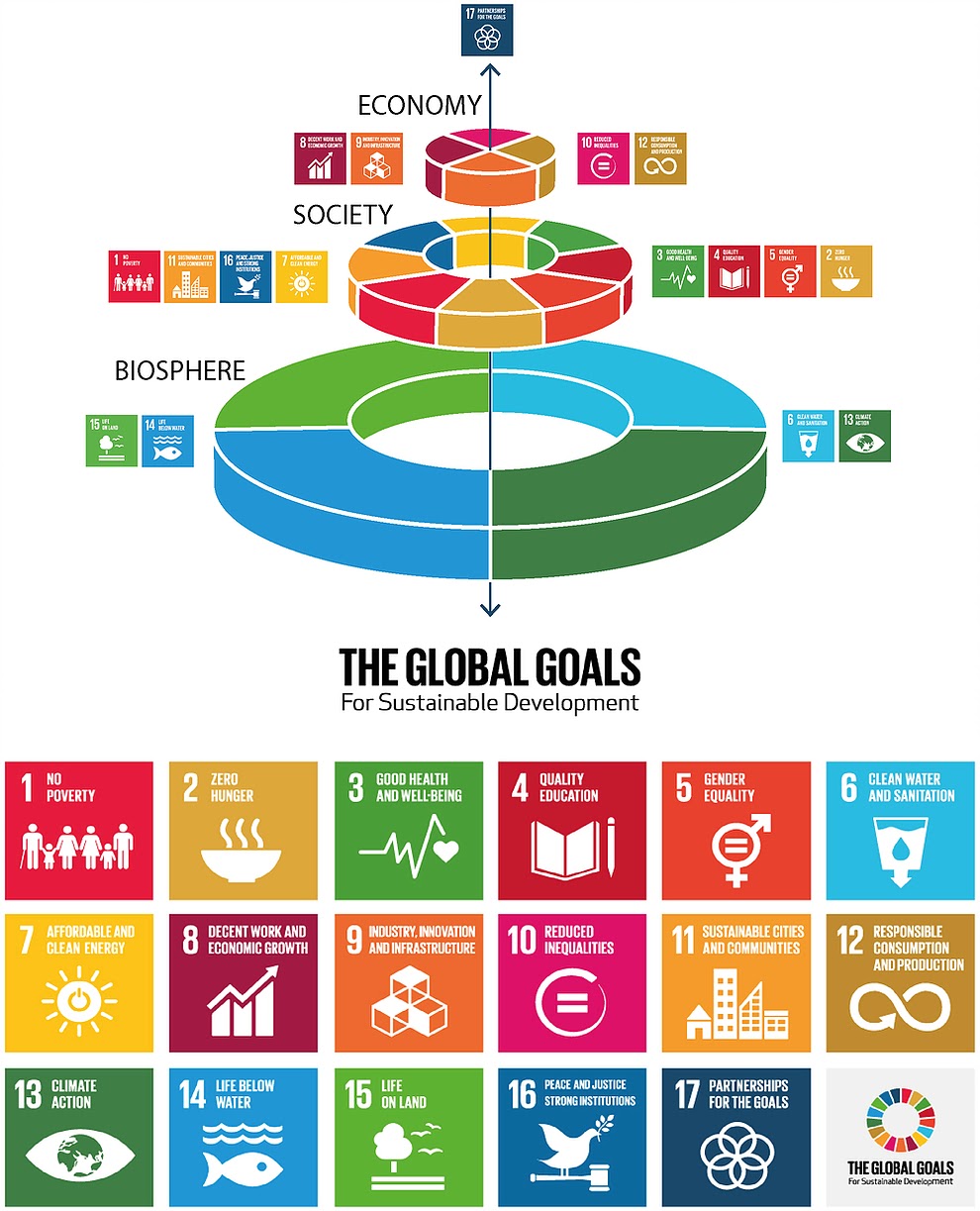
The Global Goals for Sustainable Development


Overview:  This agenda is a plan of action for people, planet and prosperity. It also seeks to strengthen universal peace in larger freedom. We recognize that eradicating poverty in all its forms and dimensions, including extreme poverty, is the greatest global challenge and an indispensable requirement for sustainable development. All countries and all stakeholders, acting in collaborative partnership, will implement this plan. We are resolved to free the human race from the tyranny of poverty and want and to heal and secure our planet. We are determined to take the bold and transformative steps which are urgently needed to shift the world onto a sustainable and resilient path. As we embark on this collective journey, we pledge that no one will be left behind. The 17 Sustainable Development Goals and 169 targets which we are announcing today demonstrate the scale and ambition of this new universal Agenda. They seek to build on the Millennium Development Goals and complete what these did not achieve. They seek to realize the human rights of all and to achieve gender equality and the empowerment of all women and girls. They are integrated and indivisible and balance the three dimensions of sustainable development: the economic, social and environmental.

Directions:  Please visit The Global Goals for Sustainable Development website below.  Find 1-2 goals you would like to explore this year.  Explain why your choices would be important to you.  How do you see this playing out in the literature we read?


Tuesday, September 18, 2018

The Fire Next Time: James Baldwin

OverviewIn preparation for our reading of Toni Morrison's Beloved, I would like you to explore the work of James Baldwin.  He is an important writer.  Period. Toni Morrison wrote of his influence on her work as an author, and we need his voice today more than ever.  He cut through the "single story" and examined what Margaret Atwood called "the how and why."  He spoke publicly, wrote essays, and got to the heart of American racism through literature.


Directions:  View the documentary and read the two short stories (you will view the documentary in class).  Next, compose a thoughtful blog post using evidence from all three works in an attempt to explore one of the complex issues Baldwin examined in his discussion of race in America.  Be okay with feeling uncomfortable.  Ask questions.  Look for feedback.  Also, practice kindness.  We can discuss these matters with passion AND civility.


I Am Not Your Negro (2017) 

We will begin viewing the documentary. In 1979, James Baldwin wrote a letter to his literary agent describing his next project, "Remember This House." The book was to be a revolutionary, personal account of the lives and assassinations of three of his close friends: Medgar Evers, Malcolm X and Martin Luther King, Jr. At the time of Baldwin's death in 1987, he left behind only 30 completed pages of this manuscript. Filmmaker Raoul Peck envisions the book James Baldwin never finished.  How can Baldwin's ideas be used to inform us today?  Can you cite instances in the documentary that opened your eyes, and show us how you see this drama playing out in 2018?

Here is a helpful study guide: 
http://learn.kera.org/wp-content/uploads/2017/12/I-Am-Not-Your-Negro-DG-Film-Club.pdf


"Sonny's Blues" (1957) by James Baldwin

The first-person narrator of "Sonny's Blues" tells the story of his relationship with his younger brother, Sonny. The story begins with narrator, saddened by his brother's choices, reflecting back on their childhood, wondering what caused his brother to become an addict.  How does Baldwin use jazz as a means of discussing the complex emotions of his characters?  This is the most anthologized of Baldwin's stories.  However, how would this story end up perpetuating "the danger of the single story?"

http://www.sjsu.edu/faculty/wooda/2B-HUM/Readings/Baldwin-Sonnys-Blues.pdf


"Going to Meet the Man" (1965) by James Baldwin

For many individuals, the relationships that exist between family members are the strongest and most influential human connections that the person will ever experience within his or her lifetime. These bonds, formed in early psycho-social development, have the potential to permanently define how a person views his or her world. Through the eyes of Jesse, we see how racism is handed down from generation to generation in one of the most graphic scenes in the literary canon.  Using moments from the story, where are you seeing similar instances in the world today?


Thursday, September 13, 2018

"Recitatif" by Toni Morrison

Directions:

1)  Please read the following "Recitatif" by Toni Morrison.

2)  Take notes.  Read slowly, and try to visualize the characters. When you read, how do you view Twyla? Roberta? Most importantly, explain why. If major changes occur, please take immediate note of the direct quotation(s) that shifted your thinking?  How does our discussion of "The Danger of the Single Story" impact your reading of this story?

3)  Discuss your reading of the text (using the aforementioned questions above) in a blog response  here.  Use direct evidence from the text.  As before, engage with each other.  Take note of how others in the class read the story.


"Recitatif" by Toni Morrison


Tuesday, September 11, 2018

Due Tuesday, September 10th - "The Danger of the Single Story" and the Importance of Becoming Global Citizens

Overview:  Every story is just a piece of the larger story of our lives.  Yet, we tend to judge people's lives on moments.  We do the same with literature.

Directions:  Please view "The Danger of a Single Story" by Chimamanda Ngozi Adichie and comment on the ways in which we judge others/authors/characters by a single story.  Think about people that you have judged by one moment. How do you define them?  Now, think about novels.  How have you judged authors/characters by a single reading?  Have you had any experiences where your opinion changed for people and authors?

Next, peruse my global website.  Please comment on something you found interesting and would like to ask me for more information.


"The Danger of a Single Story"
by Chimamanda Ngozi Adichie

Culture. The word originated with the definition"to cultivate land," and evolved into a "cultivation of the mind." Today the word is ambiguous, referring to our attachment to a place, traditions, and beliefs. It also has ominously been used to discuss an "otherness" through stereotypes.

Chimamanda Ngozi Adichie shares her experiences with the notion of culture in "The Danger of a Single Story" in an important TED Talk that will explain the importance of global intelligence.


"Mr. P. Goes Global"
by Eric Pellerin


Due Wednesday, May 22nd - Farewell Blog

Dear Scholars, With the year coming to a close, I would like to say how proud I am of all of you, and everything you accomplished this pa...